


Vision tends to be taken for granted until it starts to change. Reading glasses that seem to need upgrading every year, screens that leave the eyes tired and dry by the evening, headlights at night that bloom into halos, and small print that demands brighter light and more squinting are experiences shared by millions of adults as they get older. The eyes, like every other part of the body, change with age, and many people look for nutritional support to help protect the vision they still have rather than waiting for problems to compound.
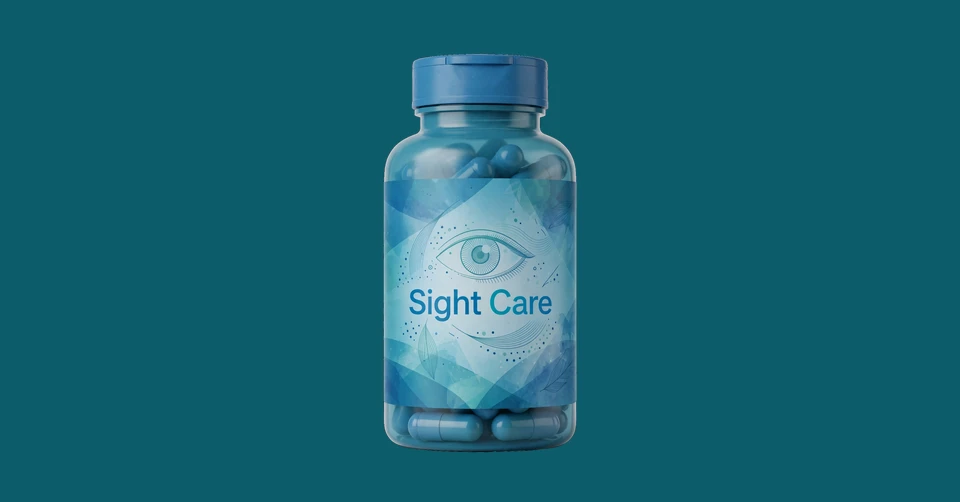
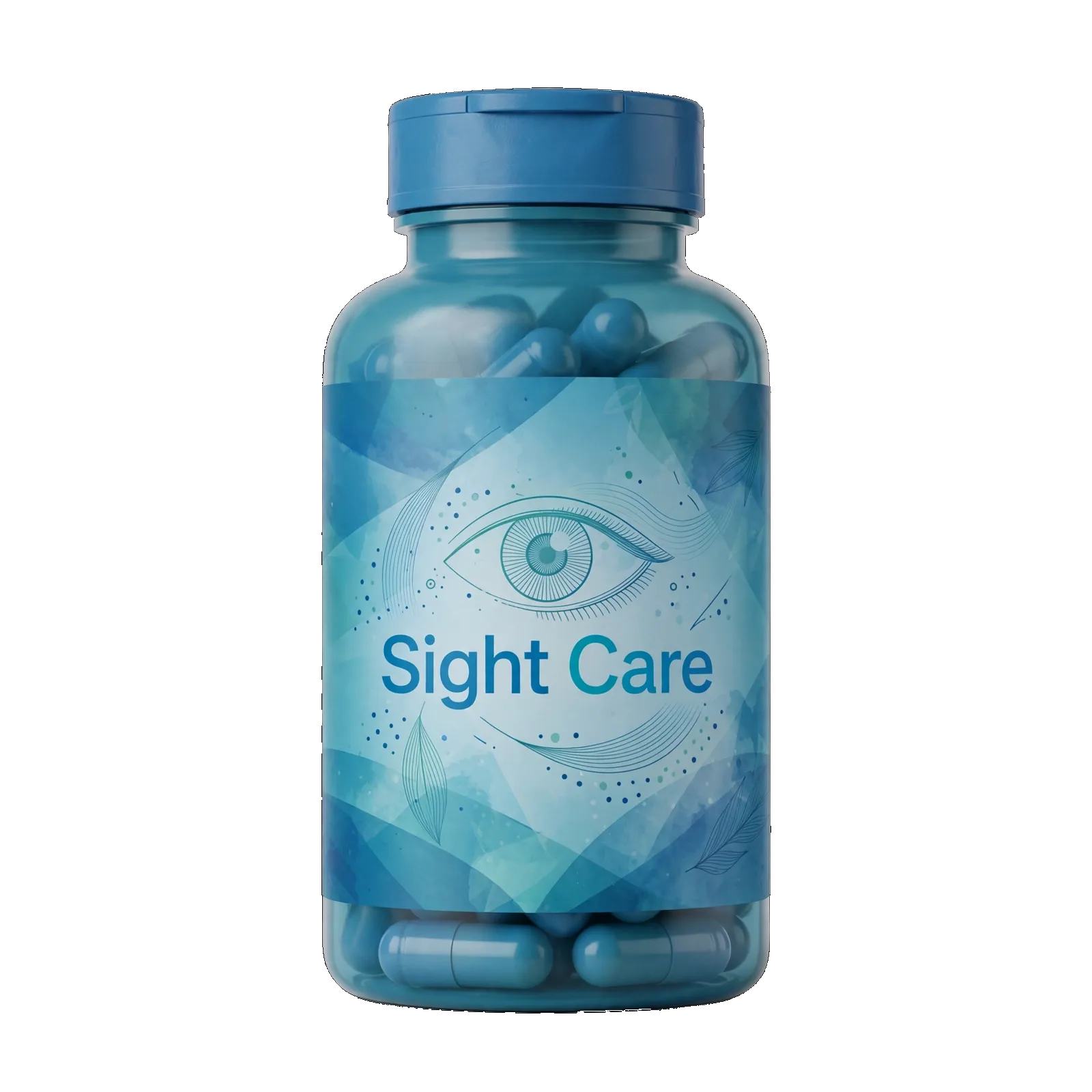
Sight Care is a dietary supplement positioned in that exact gap: a daily capsule of eye-health nutrients, botanical extracts, and antioxidants marketed to support vision clarity, macular health, eye comfort, and overall ocular nutrition. The marketing around it is dramatic, built on a stem cell story and promises of restored 20/20 vision that deserve close scrutiny. But beneath the hype, there is a real formula with a published ingredient list of eleven nutrients, a stated US manufacturing standard, a written money-back policy, and one-time billing with no subscription. The honest question is whether any of that adds up to a product worth buying. In this detailed Sight Care review, we examine the full ingredient list, the science that exists (and the science that does not), the pricing, the guarantee, the ordering process, and what the real customer review landscape looks like, so you can make an informed decision.
What Is Sight Care?
Sight Care is a capsule-based dietary supplement marketed for vision support, eye health, and visual clarity. It is sold through online direct-response sales pages and positioned for adults concerned about aging eyes, eye strain from screens, night vision, and the long-term health of the macula and retina. The formula combines eleven natural ingredients: eight main ingredients (lutein, N-acetyl-L-cysteine, bilberry extract, L-lysine, zeaxanthin, quercetin, eyebright, and astaxanthin) and three minor ingredients (ascorbic acid, copper gluconate, and zinc oxide). These are familiar names in eye nutrition, and several of them appear in established eye health products and in the general ingredient research literature.
Each bottle contains 30 capsules, which is marketed as a 30-day supply. Promotional materials describe the capsules as easy to swallow and the formula as vegetarian-friendly, non-GMO, and free of gluten, soy, preservatives, stimulants, and artificial coloring. We could not independently verify every one of those formulation claims against a printed label, so they should be treated as manufacturer-stated claims rather than independently verified facts. That said, the capsule format and the general profile are ordinary for this category, and nothing about the described format raises a red flag.
On manufacturing, the promotional materials state that Sight Care is made in the USA in a facility described as FDA and GMP certified, with the additional claim of NSF certification. One clarification matters here: supplement manufacturing facilities are FDA-registered, not FDA-approved, and any sales page that says “FDA Approved Facility” is using imprecise language. GMP (Good Manufacturing Practice) certification is the meaningful quality standard for supplements, and it is a positive disclosure when stated credibly. We could not independently verify the facility certifications, so they sit in the manufacturer-stated column.
One important note about where Sight Care is sold: affiliate review pages variously name getsightcare.org as the official website, while at least one promotional page operates under a different domain. Because these pages are affiliate marketing funnels, pricing, bonus offers, and guarantee language can differ depending on which page a buyer lands on. We could not confirm a single definitive official storefront through independent means, so the exact official URL should be treated as variable, and buyers should verify every term on the precise checkout page they use. Affiliate pages also report that Sight Care is not sold on Amazon, which would mean the brand controls distribution through its own pages (if true, that reduces the risk of counterfeit bottles, but we could not independently verify this claim).
Like all dietary supplements sold in the United States, Sight Care carries the standard FDA disclaimer: these statements have not been evaluated by the Food and Drug Administration, and the product is not intended to diagnose, treat, cure, or prevent any disease. That is normal for the category, but it is worth keeping firmly in mind when reading the marketing, which is significantly bolder than the disclaimer. Promises of restored 20/20 vision sit uncomfortably beside a disclaimer that the product is not intended to treat any disease, and that tension is one of the central facts of this review.
How Does Sight Care Work?
According to the brand’s marketing, Sight Care is designed to support vision through several nutritional pathways rather than one single mechanism. The central marketing story is that the ingredients help activate the body’s “adult repair stem cells,” which are then supposed to restore and rejuvenate eye tissue. This story is attributed in affiliate materials to a “Dr. David Lewis,” described as an eye health specialist with 37 years of experience who allegedly formulated the product based on the discovery of adult repair stem cells by Nobel laureate Shinya Yamanaka. Let us be direct: this is a sales narrative, not evidence. We found no published clinical trial of Sight Care itself, no peer-reviewed paper connecting this formula to stem cell activity, and no independent confirmation of the creator’s credentials. The stem cell framing should be treated as marketing until real evidence appears, which it has not.
Stripping away the sales narrative, the actual proposed mechanisms of the formula are conventional eye nutrition, and they are more defensible. Lutein and zeaxanthin are carotenoid pigments concentrated in the macula, where they act as a natural filter for blue light and as antioxidants protecting against oxidative stress. Antioxidants such as astaxanthin, quercetin, N-acetyl-L-cysteine, and ascorbic acid are included for protection against oxidative damage, a process widely recognized as a factor in age-related eye changes. Bilberry and eyebright bring traditional associations with night vision and eye comfort. L-lysine is included for its role in collagen production, which matters for the structural integrity of ocular tissues. Zinc and copper are trace minerals involved in antioxidant enzyme systems and nutritional balance.
That is the theory, and the ingredient selection is coherent for an eye health formula: the components are familiar from established eye nutrition products and from the general ingredient literature on ocular health. The important limitation, which we return to throughout this review, is that ingredient-level research does not automatically transfer to the finished product. Lutein and zeaxanthin have been studied in significant published research (including the AREDS and AREDS2 trials on nutritional interventions for age-related macular degeneration), but those studies used specific, fully disclosed doses in specific combination formulas, and their results cannot be transferred to Sight Care, where individual ingredient amounts are not published in the materials we reviewed. There is no publicly available evidence that the complete Sight Care formula itself has ever been clinically tested for vision outcomes. The product’s promotional materials do not cite any clinical trial of Sight Care itself, and none could be found.
A final honest point on mechanism: no nutritional supplement can regrow eye tissue, reverse cataracts, or restore 20/20 vision in the way the sales pages imply. Supplements can supply nutrients that support normal eye function and protect against oxidative stress. That is a legitimate, modest role. The gap between that modest role and the marketing’s bold promises is the single most important thing a buyer should understand before purchasing.
Sight Care Ingredients
The Sight Care formula, as published in promotional and affiliate materials, lists eleven natural ingredients. Eight are described as the main ingredients and three as minor ingredients. One honest limitation: the materials we reviewed do not publish individual dosages for the ingredients, so we could not verify how much of each nutrient a daily serving actually provides. That is a real transparency gap, because a buyer cannot compare the amounts to the forms and amounts used in published ingredient research. A second point of inconsistency: some affiliate pages list niacin among the ingredients while the primary ingredient lists do not, which suggests the formula information varies across sales funnels. Buyers should check the Supplement Facts panel on the actual bottle before use.
| Ingredient | What It Is | Why It Is Included |
|---|---|---|
| Lutein | Macular carotenoid pigment | The primary macular pigment nutrient in eye research; blue light filtering |
| Zeaxanthin | Macular carotenoid pigment | Partner macular pigment nutrient alongside lutein |
| N-Acetyl-L-Cysteine (NAC) | Amino acid derivative and antioxidant | Supports lens transparency and protects against oxidative stress in brand materials |
| Bilberry Extract | Berry botanical extract | Traditional association with night vision and eye circulation |
| L-Lysine | Essential amino acid | Role in collagen production supporting ocular tissue structure |
| Quercetin | Plant flavonoid antioxidant | Anti-inflammatory and antioxidant properties in ingredient literature |
| Eyebright | Botanical extract | Traditional eye health botanical used in folk medicine for eye conditions |
| Astaxanthin | Carotenoid antioxidant | Antioxidant support; studied for eye strain in ingredient research |
| Ascorbic Acid (Vitamin C) | Antioxidant vitamin | Antioxidant protection for eye tissue |
| Copper Gluconate | Essential trace mineral | Nutritional balance; copper commonly paired with zinc |
| Zinc Oxide | Essential mineral | Zinc is concentrated in the eye; antioxidant enzyme support |
Lutein and Zeaxanthin
Lutein and zeaxanthin are the best-supported ingredients in this formula. They are carotenoid antioxidants naturally concentrated in the macula, the central part of the retina responsible for sharp, detailed vision. They act as a natural filter, absorbing harmful blue light and protecting the eyes from photodamage. By neutralizing free radicals and reducing oxidative pressure, they help maintain normal visual function. Published research, including the large AREDS and AREDS2 trials on nutritional support for age-related macular degeneration, has studied these carotenoids at specific disclosed doses. That research is ingredient-level and condition-specific; it supports lutein and zeaxanthin as reasonable inclusions in an eye supplement, but it does not prove that Sight Care’s formula produces any particular vision outcome.
N-Acetyl-L-Cysteine (NAC)
NAC is a derivative of the amino acid cysteine and a precursor to glutathione, one of the body’s main internal antioxidants. The brand’s materials position it as supporting lens transparency and protecting the eyes from oxidative stress. NAC is a legitimate antioxidant nutrient with a long history of use, but the specific vision claims made for it on the sales pages are not backed by published clinical trials of NAC for vision outcomes that we could find, and certainly not by any trial of this finished product.
Bilberry Extract
Bilberry is one of the oldest botanicals associated with eye health, famous for the (likely apocryphal) story of World War II pilots eating bilberry jam to improve night vision. Its anthocyanin antioxidants are genuinely interesting compounds, and bilberry appears in many eye formulas. The night vision legend, however, has never been convincingly confirmed in controlled research. Bilberry is a reasonable traditional inclusion, not a proven vision restorer.
L-Lysine
L-lysine is an essential amino acid that the body cannot produce and must obtain from diet or supplements. The brand’s materials emphasize its role in collagen production, which is relevant to the structural integrity of ocular tissues including the cornea and sclera. That is a plausible nutritional rationale, though it is general wellness nutrition rather than a vision-specific mechanism proven for this formula.
Quercetin and Astaxanthin
Quercetin is a plant flavonoid with antioxidant and anti-inflammatory properties in the ingredient literature, included for reducing oxidative damage to the eyes. Astaxanthin is a potent carotenoid antioxidant that has been studied for eye strain and visual fatigue in ingredient-level research, and it also supports blood flow. Both are credible antioxidant inclusions for an eye formula, with the usual caveat that ingredient research does not equal product efficacy.
Eyebright
Eyebright is an herb traditionally used to support vision health, and its very name comes from its historical use in folk medicine for eye conditions. It is rich in various plant compounds, but modern clinical evidence for eyebright as a vision-support ingredient is thin. It is a traditional inclusion that adds marketing story value more than proven function.
Ascorbic Acid, Copper Gluconate, and Zinc Oxide
These three minor ingredients round out the formula. Vitamin C is a well-established antioxidant that concentrates in eye tissue. Zinc is an essential mineral concentrated in the eye and involved in antioxidant enzyme systems, and copper is commonly paired with zinc in eye formulas for nutritional balance (long-term zinc supplementation without copper can disturb copper status, so the pairing is sound formulation practice). These are ordinary, sensible inclusions.
What Does the Science Say?
The honest science summary for Sight Care has three parts. First, several individual ingredients have genuine support in the published literature for general eye nutrition: lutein and zeaxanthin have the strongest evidence base among them, with large trials studying their role in macular health; astaxanthin, quercetin, NAC, vitamin C, and zinc each have plausible antioxidant mechanisms and varying degrees of ingredient-level research. Second, none of that research was conducted on Sight Care itself. We found no published clinical trial, no peer-reviewed study, and no disclosed testing of the finished Sight Care formula for any vision outcome. The promotional claim that the ingredients “have been shown by scientific studies” to boost adult repair stem cells that restore vision is not supported by any citation we could find, and it misrepresents how ingredient research works. Third, the boldest marketing claims (restored 20/20 vision, reversal of eye conditions, stem cell activation) are unsubstantiated for this product and should be treated as sales copy.
The fair conclusion: the formula is built from recognizable eye-nutrition ingredients with real, if modest, scientific standing as nutritional support. That makes it a plausible eye health supplement. It does not make it a proven vision-restoration treatment, and the marketing goes far beyond what the science supports. Buyers should purchase it, if at all, for what it plausibly is (a daily eye-nutrition capsule), not for what the sales pages promise (restored perfect vision).
Potential Benefits of Sight Care
The following are the intended uses of the formula, framed as what the nutrients are meant to support rather than as promised results. No supplement can guarantee any of these outcomes, and individual responses vary.
- Macular nutritional support: lutein and zeaxanthin supply the carotenoid pigments concentrated in the macula, the retinal region responsible for sharp central vision.
- Antioxidant protection for the eyes: astaxanthin, quercetin, NAC, vitamin C, and zinc contribute antioxidant coverage against oxidative stress, a recognized factor in age-related eye changes.
- Support for visual comfort during screen use: astaxanthin and bilberry are commonly included in formulas aimed at eye strain and visual fatigue from prolonged screen time.
- Night vision nutritional support: bilberry has a traditional (though unproven) association with night vision, and vitamin A related nutrition plus zinc support normal visual function in low light.
- Structural support for ocular tissues: L-lysine supports collagen production relevant to the cornea and sclera, and copper balances the zinc content.
- General wellness positioning: the brand’s materials also mention liver health, brain health, and energy, which are generic antioxidant-adjacent claims rather than vision-specific effects.
Pros and Cons
| Pros | Cons |
|---|---|
| Published eleven-ingredient formula with recognizable eye-nutrition ingredients (lutein, zeaxanthin, astaxanthin, bilberry, NAC) | Individual ingredient dosages are not published in the materials we reviewed, so the formula cannot be compared to research doses |
| Stated US manufacturing with claimed GMP standards, a positive disclosure for this category | Bold marketing claims (20/20 vision restoration, stem cell activation) are unsubstantiated for the finished product |
| Written money-back guarantee of 180 days on most promotional pages, which is generous if honored | Guarantee period is inconsistent across sales funnels (one affiliate page cited 60 days), so buyers must confirm on their exact checkout page |
| One-time billing with no subscription, per the sales materials | Multiple affiliate domains create confusion about the official website, pricing, and bonus offers |
| Natural, non-GMO, gluten-free, soy-free positioning with no stimulants | Creator credentials and the stem cell origin story are unverified marketing narrative, not evidence |
| Support email provided (support@GetSightCare.com) | No published clinical trial of the finished formula; ingredient research does not transfer to the product |
Sight Care Customer Reviews: What Are Real Users Saying?
Here is where honesty requires us to say what we could not find. The visible “review” landscape for Sight Care consists almost entirely of affiliate marketing pages: long-form sales pages on domains like scribehow.com, evertise.net, marylandreporter.com, and issaquahreporter.com that are structured as reviews but function as funnels to the checkout page, complete with “limited time discount” banners and bonus book offers. These pages are written in the voice of independent journalism but follow an identical template across many different supplements, which is the standard footprint of affiliate review marketing.
We found no verifiable independent customer review data for Sight Care: no product page with a review system we could audit, no forum discussions, no consumer platform ratings that we could confirm as genuine, and no clinical user testing. We will not invent testimonials, quote anonymous “verified buyers,” or present the affiliate pages’ claims as real user experiences, because doing so would be fabrication. The practical consequence for a buyer is simple: there is no trustworthy public record of what real users experience with Sight Care. Anyone who buys it is doing so on the strength of the ingredient list and the guarantee, not on a track record of verified customer outcomes.
That absence of independent reviews is itself a data point. Established supplements with large customer bases tend to accumulate at least some verifiable third-party discussion. The fact that Sight Care’s footprint is dominated by affiliate funnels rather than by real customer conversation is a caution flag, though it is not proof the product does not work. It means the buyer should discount every “review” that ends in a buy button, including this one to the extent that it earns from a sale, and should weigh the formula and the guarantee terms as the primary evidence.
Sight Care Pricing
Pricing is consistent across most of the affiliate sales pages we reviewed, though buyers should always confirm on their exact checkout page because affiliate funnels can vary. The pricing below reflects what is most widely published, with the usual caveat that prices can change and that the “regular price” framing on sales pages is marketing.
| Package | Price | Shipping | Notes |
|---|---|---|---|
| 1 bottle (30-day supply) | $69.00 | $9.99 | Starter option; highest per-bottle cost |
| 3 bottles (90-day supply) | $59.00 per bottle ($177.00 total) | Free | Includes free bonus guide, “The TRUTH About Vision” |
| 6 bottles (180-day supply) | $49.00 per bottle ($294.00 total) | Free | Lowest per-bottle cost; matches the guarantee window |
One promotional page lists a “regular price” of $149 against the $69 single-bottle price, which is a classic anchoring tactic; there is no evidence the product ever sells at $149. The three and six bottle packages waive the $9.99 shipping fee and add the free digital bonus book, which affiliate pages say has helped over 110,000 people naturally restore their vision (an unverifiable claim, but the book itself is a free add-on, not the reason to buy). As always with this category, verify the final price, shipping, and bonus terms at checkout before paying, and take screenshots of the order summary.
Money-Back Guarantee
Sight Care’s promotional materials most widely advertise a 180-day, 100% money-back guarantee, which is a generous window that covers even the six-bottle package. If honored as written, that gives a buyer six months to evaluate the product with a full refund available. One affiliate page instead cited a 60-day return policy, which is a meaningful conflict: buyers must confirm which guarantee period appears on their exact checkout page and keep a record of it, because the refund window determines how much risk the buyer actually takes.
Practical notes for anyone who might need the guarantee: buy only from the checkout page whose guarantee terms you have read and saved; keep the order confirmation email and any order number; note the deadline for the refund request based on the delivery date; and contact the listed support email (support@GetSightCare.com) in writing so there is a record. A long guarantee is only as good as the company behind it, and with a product sold through affiliate funnels, written records are the buyer’s best protection.
How to Buy Sight Care
Sight Care is sold online through its sales pages rather than through retail stores. Affiliate materials name getsightcare.org as the official website and report that the product is not available on Amazon, which, if accurate, means buyers should avoid third-party marketplace listings that could be counterfeit or expired stock. We could not independently verify the official URL or the Amazon claim, so treat both as reported rather than confirmed, and be cautious of lookalike domains.
The ordering process described on the sales pages is a standard one-time purchase: choose a package, enter shipping and payment details, and check out with no subscription or recurring billing. Before paying, verify the package price, the shipping fee, the bonus book inclusion, and the guarantee period on the exact page you are using, because affiliate funnels can differ. Take a screenshot of the order summary and save the confirmation email. If the checkout page shows any subscription or auto-ship language, stop and do not complete the order, since the product is marketed as a one-time purchase.
Safety and Side Effects
Sight Care is described as a natural formula with no reported major side effects in its promotional materials, and the ingredient profile is generally gentle. That said, “natural” is not a synonym for “risk-free,” and a few cautions apply. Zinc at supplemental levels can cause nausea on an empty stomach in some people, so taking the capsule with food is sensible. NAC can interact with certain medications, including nitroglycerin and some blood pressure drugs, and anyone taking prescription medication should check with a doctor or pharmacist first. People who are pregnant or nursing, people under 18, and people with diagnosed eye conditions such as glaucoma, macular degeneration, or diabetic retinopathy should consult an eye care professional before using any vision supplement, because a supplement is never a substitute for medical eye care.
Bilberry and other botanicals can cause mild digestive upset in sensitive individuals, and anyone with allergies to plants in these families should read the label carefully. The standard FDA disclaimer applies: these statements have not been evaluated by the Food and Drug Administration, and the product is not intended to diagnose, treat, cure, or prevent any disease. If you experience any adverse reaction, stop use and seek medical advice.
Who Is Sight Care Best For?
Sight Care is best suited to adults who want a daily eye-nutrition capsule built around recognizable ingredients like lutein, zeaxanthin, and astaxanthin, and who understand they are buying nutritional support rather than a vision cure. It may appeal to people with heavy screen use who want antioxidant support for eye comfort, to adults over 40 thinking about long-term macular nutrition, and to buyers who value a long refund window and one-time billing. It is not for anyone expecting restored 20/20 vision, a reversal of cataracts or macular degeneration, or a replacement for prescription glasses, contact lenses, or professional eye care. It is also not for buyers who need fully disclosed dosages before they purchase, since the per-ingredient amounts are not published in the materials we reviewed.
Sight Care vs. Other Vision Supplements
The vision supplement market includes established formulas with fully disclosed labels and large published trials behind their ingredient combinations. Here is how Sight Care compares on the dimensions a buyer can actually verify.
| Feature | Sight Care | Established AREDS2-style formulas | Typical affiliate-marketed eye supplements |
|---|---|---|---|
| Ingredient disclosure | Ingredients named; individual dosages not published | Full dosages disclosed | Varies; many hide behind proprietary blends |
| Key actives | Lutein, zeaxanthin, NAC, bilberry, astaxanthin, quercetin, eyebright, lysine, C, copper, zinc | Lutein, zeaxanthin, vitamins C and E, zinc, copper (AREDS2 formula) | Overlapping botanical and antioxidant blends |
| Clinical evidence for the finished product | None published that we could find | Large published trials of the formula itself | Usually none |
| Price per month | About $69 for one bottle; less in bundles | Often $20 to $40 per month | Often $49 to $69 per bottle |
| Guarantee | 180 days on most sales pages (conflicting 60-day mention elsewhere) | Retailer-dependent, usually 30 days | 60 to 180 days typical |
| Marketing tone | Aggressive (20/20 vision, stem cells) | Clinical and restrained | Usually aggressive |
The comparison is instructive. Established AREDS2-style formulas cost less per month, disclose full dosages, and have large published trials behind the exact formula, but they make modest, clinical claims. Sight Care costs more per month while disclosing less and proving less. A buyer choosing Sight Care over an AREDS2-style formula is paying more for a broader botanical blend and a longer guarantee while accepting weaker evidence and louder marketing. That is a legitimate trade-off only if the buyer understands it.
Frequently Asked Questions
What is Sight Care?
Sight Care is a capsule-based dietary supplement marketed for vision support and eye health. Its published formula lists eleven natural ingredients, including lutein, zeaxanthin, N-acetyl-L-cysteine, bilberry extract, L-lysine, quercetin, eyebright, astaxanthin, ascorbic acid, copper gluconate, and zinc oxide. Each bottle contains 30 capsules, marketed as a 30-day supply.
Does Sight Care really restore 20/20 vision?
There is no published evidence that Sight Care restores 20/20 vision or reverses any eye condition. The formula contains legitimate eye-nutrition ingredients, but ingredient-level research does not transfer to the finished product, and no clinical trial of Sight Care itself could be found. Treat the 20/20 claims as marketing, not evidence.
How much does Sight Care cost?
Published pricing is $69.00 for one bottle plus $9.99 shipping, $59.00 per bottle for three bottles ($177.00 total) with free shipping and a free bonus guide, and $49.00 per bottle for six bottles ($294.00 total) with free shipping. Always confirm the price on your checkout page before paying.
Is there a money-back guarantee?
Most promotional pages advertise a 180-day, 100% money-back guarantee, though one affiliate page cited 60 days. Confirm which period appears on your checkout page and keep written records of your order.
Where can I buy Sight Care?
Affiliate materials name getsightcare.org as the official website and report that it is not sold on Amazon. We could not independently verify either claim, so verify terms on the exact checkout page you use and avoid third-party marketplace listings.
Are there any side effects?
The promotional materials report no major side effects, and the ingredient profile is generally gentle. Possible issues include mild digestive upset (especially from zinc on an empty stomach) and interactions between NAC and certain medications. Consult a doctor before use if you take prescription drugs, are pregnant or nursing, or have a diagnosed eye condition.
How do I take Sight Care?
The bottle contains 30 capsules marketed as a one-month supply. Follow the serving directions on the actual product label, since serving details vary across the sales materials we reviewed, and take the capsule with food and water unless the label says otherwise.
Is Sight Care a subscription?
According to the sales materials, Sight Care is a one-time purchase with no subscription or auto-ship. Verify this on your checkout page before paying, and do not complete the order if subscription language appears.
Final Verdict: Should You Buy Sight Care?
After a full review, our verdict is measured. Sight Care is not an obvious scam: the formula is real, the ingredients are recognizable eye-nutrition nutrients, the company discloses a support email, and a long money-back guarantee is advertised. A buyer who understands exactly what this is, a daily antioxidant and macular-nutrition capsule, and who buys it for that modest purpose at a price they can afford, is not being irrational.
But the case against buying is substantial. The marketing promises restored 20/20 vision and stem cell activation with no published evidence for the finished product. Individual ingredient dosages are not published, so the formula cannot be evaluated against research doses. The review landscape is dominated by affiliate funnels rather than verifiable customer experiences, and the official website, guarantee period, and even the ingredient list vary across sales pages. Compared with established AREDS2-style formulas, Sight Care costs more per month while disclosing less and proving less.
Our editorial score: 3.1 out of 5. The ingredient selection is coherent and the guarantee is generous, but the unsubstantiated marketing claims, the missing dosages, and the affiliate-driven sales environment cost it dearly. If you want the AREDS2 nutrients with full disclosure and real trial evidence at a lower price, buy an established AREDS2-style formula instead. If you specifically want Sight Care’s broader botanical blend and are comfortable paying a premium for it, buy only the single bottle first, confirm the 180-day guarantee terms in writing on your checkout page, and keep your order records. And whatever you choose, keep seeing your eye doctor: no capsule replaces professional eye care.