


Most weight-loss supplements on the market are blends of caffeine, green tea extract, and herbal ingredients with big marketing claims and very little regulatory oversight. Alli Weight Loss is different. Alli is an FDA-approved over-the-counter weight-loss aid whose active ingredient is orlistat 60 mg, a medicine that has been sold since 2007 and whose prescription-strength sibling, Xenical, contains 120 mg of the same compound. Instead of stimulating your metabolism or suppressing your appetite, Alli works mechanically in your digestive tract: it blocks the enzymes that digest fat so that a portion of the fat you eat passes through your body unabsorbed. That makes it one of the most unusual, and most honestly studied, products in the weight-loss aisle. But does blocking fat absorption actually translate into meaningful weight loss, and can most people tolerate the famously unpleasant side effects? This in-depth Alli Weight Loss review covers what the product is, how orlistat works, the ingredients, what the evidence says, pricing, safety warnings including a June 2026 FDA kidney warning, how it compares with other carb and fat blocker supplements, and an honest final verdict, so you can decide with clear eyes.
An important note before we begin: everything in this review is based on publicly available information from the brand, retailers, and product labeling. Where facts are unknown, unverifiable, or vary between sources, we say so plainly. We do not invent customer testimonials, clinical trial results, ratings, or guarantee terms, and we do not pretend Alli has been proven to do things beyond what its labeling describes. Alli is a real medicine, not a food supplement, and it comes with real contraindications and drug interactions. If you take prescription medicines or have a medical condition, talk to your doctor or pharmacist before using it. This review is for information only and is not medical advice.
What Is Alli Weight Loss?
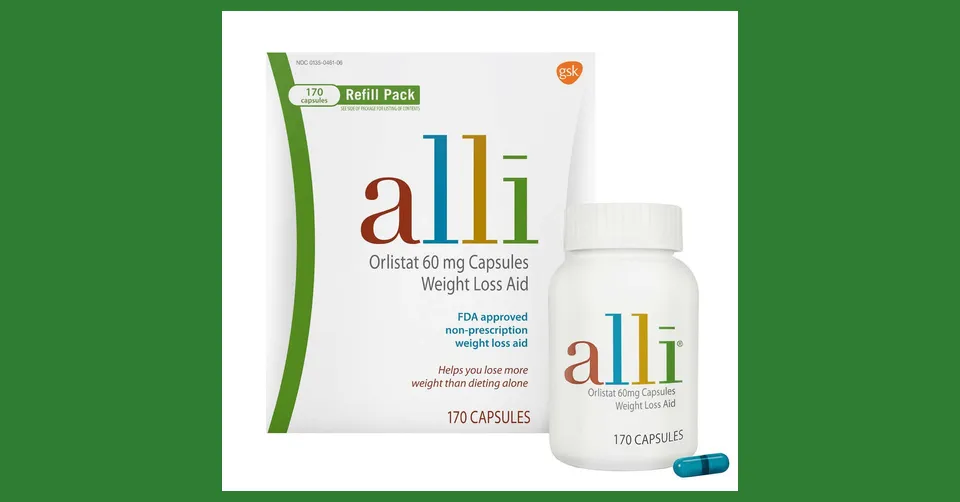
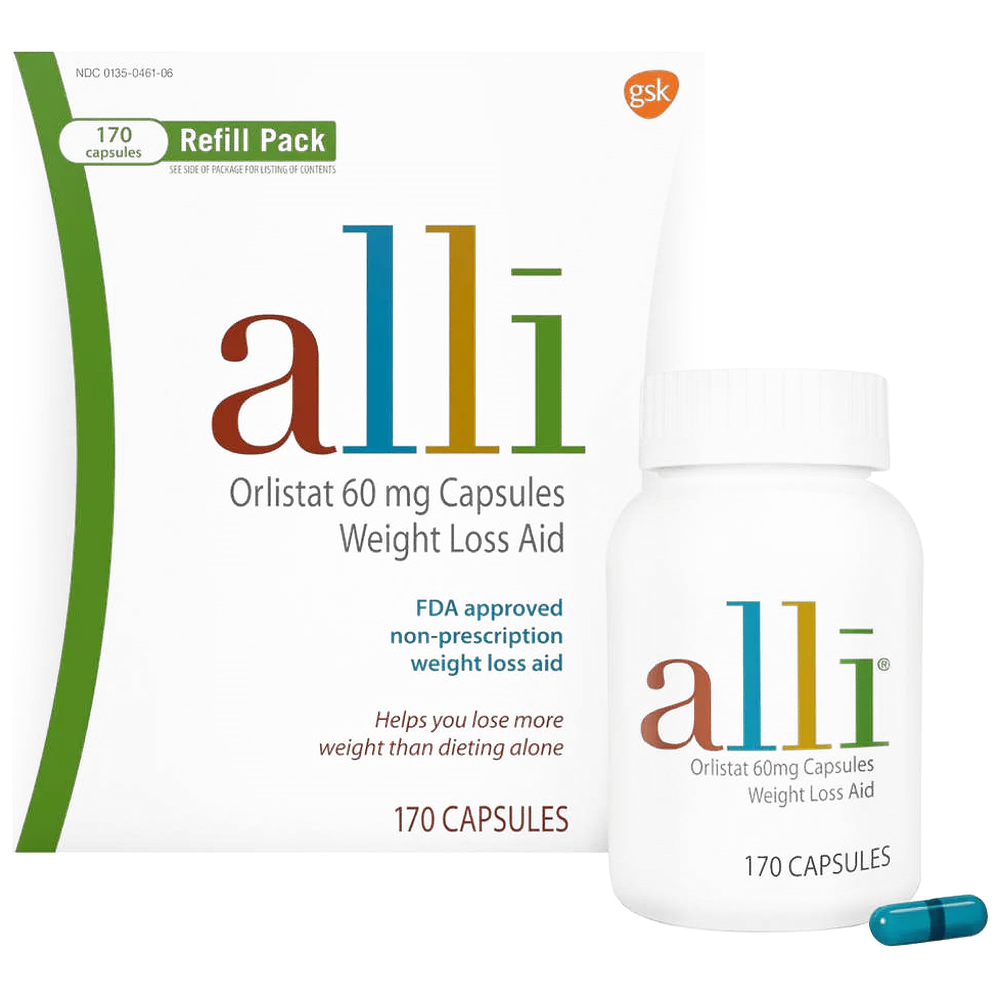
Alli (pronounced “AL-eye”) is an over-the-counter weight-loss aid containing orlistat 60 mg per capsule. It was launched in 2007 by GlaxoSmithKline (GSK, whose consumer health business is now known as Haleon) and was the first, and remains one of the only, FDA-approved weight-loss medicines available without a prescription in the United States. Its active ingredient, orlistat, is the same compound found in the prescription medicine Xenical, which contains 120 mg of orlistat per capsule, exactly double the Alli dose. Because Alli is an approved medicine rather than a dietary supplement, it is subject to drug labeling rules: its package carries formal directions, warnings, contraindications, and a Drug Facts panel, which is more regulatory scrutiny than the vast majority of weight-loss pills on store shelves ever receive.
Alli is intended for overweight adults aged 18 and older who are following a reduced-calorie, low-fat diet. It is not a standalone fat burner and it is not meant to replace diet and exercise; the product labeling positions it explicitly as an aid to be used together with a sensible eating plan. The recommended dose is one 60 mg capsule with each main meal that contains fat, up to three capsules per day. If you skip a meal or your meal contains no fat, you skip that dose. In the UK, where Alli is also sold, guidance advises use for people with a body mass index (BMI) of 28 or higher, and for a maximum of six months, after which you should reassess with a pharmacist or doctor. These details matter because Alli only works in the context of the diet it is paired with, a point the rest of this review will return to again and again.
Alli is sold in three pack sizes: a 60-count starter pack, a 120-count pack, and a 170-count refill pack. Because the product has been on the market since 2007, it is one of the longest-running branded weight-loss products in existence, which means there is nearly two decades of real-world user experience behind it. That long history cuts both ways: it confirms the product is a legitimate, regulated medicine, but it also means the pattern of how people actually fare on it, including how many quit because of side effects, is well documented. We cover that honestly in the reviews section below.
How Does Alli Weight Loss Work?
Alli works through a mechanism that is refreshingly simple to explain, because it is a drug with a defined pharmacological action rather than a proprietary herbal blend. The active ingredient, orlistat, is a lipase inhibitor. Lipases are the digestive enzymes, produced mainly by the pancreas, that break down dietary fat (triglycerides) into smaller molecules your intestines can absorb. Orlistat binds to these lipases in your stomach and small intestine and blocks them from doing their job. Fat that is not broken down cannot be absorbed, so it passes through the digestive tract and leaves the body in the stool. In plain English: Alli stops your body from absorbing a portion of the fat you eat, which reduces the calories your body actually takes in from each meal.
How much fat does it block? Product information states that orlistat blocks the absorption of about 25 percent of the fat you eat, though some references describe the figure as approximately 30 percent, so treat the exact number as a range rather than a precise promise. Either way, it is a minority of your fat intake, not all of it, which is why the low-fat diet requirement is so central. A crucial detail is that orlistat has minimal systemic absorption: it acts locally in the digestive tract and is not meaningfully absorbed into the bloodstream. That means it does not act on the brain, does not suppress appetite, does not speed up the heart, and does not alter metabolism. If you were hoping for a pill that kills hunger or gives you energy, this is not it. It is a mechanical calorie-reduction tool, and its effects are entirely dependent on the fat content of your meals.
This mechanism also explains the product’s notorious side effects, which the labeling calls “treatment effects.” Undigested fat has to go somewhere, and it exits through the bowel: oily spotting, loose stools, gas with oily discharge, and more frequent or urgent bowel movements. These effects get worse with high-fat meals, which is by design a built-in behavioral nudge toward eating less fat. Users who stick to the recommended low-fat eating plan typically experience milder effects; users who eat a fatty meal while taking Alli usually learn the lesson quickly and unpleasantly. Think of it less as a conventional side effect profile and more as the mechanism itself made visible. That honesty about cause and effect is actually one of the product’s strengths: there is no mystery about how it works or why it does what it does.
One more practical consequence of the mechanism: because orlistat reduces fat absorption, it also reduces the absorption of fat-soluble vitamins, specifically vitamins A, D, E, and K. Product labeling advises taking a daily multivitamin containing these nutrients at bedtime, separated from your Alli doses, so the vitamin supplement is absorbed when the drug is not active in your gut. This is not optional fine print; it is part of using the product correctly over weeks and months.
Alli Weight Loss Ingredients
Unlike typical supplements with long proprietary blends, Alli has exactly one active ingredient. The rest of the capsule is made up of standard pharmaceutical inactive ingredients (excipients) used to form the capsule and its contents. Here is the complete breakdown.
| Ingredient | What It Is | Why It Is Included |
|---|---|---|
| Orlistat 60 mg | The active drug ingredient, a lipase inhibitor | Blocks digestive lipases so about 25 percent of dietary fat passes through unabsorbed, reducing calorie intake |
| Gelatin | Animal-derived capsule shell material | Forms the capsule; note: this means the product is not vegetarian |
| Microcrystalline cellulose | Plant-derived filler and binder | Gives the capsule contents bulk and structure |
| Povidone | Pharmaceutical binder | Holds the capsule contents together |
| Sodium starch glycolate | Disintegrant | Helps the capsule break apart in the digestive tract |
| Sodium lauryl sulfate | Surfactant and wetting agent | Aids dispersion of the contents in the gut |
| Talc | Mineral anti-caking agent | Keeps the powder flowing during manufacture |
| Titanium dioxide | White pigment | Colors the capsule shell opaque white |
| FD&C Blue No. 2, iron oxide | Colorants | Give the capsule its distinctive turquoise blue band and markings |
| Edible ink | Printing ink | Prints markings on the capsule |
Orlistat 60 mg: The Key Active Ingredient
Orlistat is the entire reason Alli exists. It is a well-characterized medicine first developed for prescription use, and Alli’s 60 mg dose is exactly half the 120 mg prescription dose found in Xenical. The 60 mg dose was chosen for over-the-counter sale as a balance between meaningful fat-blocking activity and a side-effect profile considered acceptable for non-prescription use. Because orlistat acts locally in the gut with minimal absorption into the bloodstream, it does not carry the cardiovascular or neurological concerns associated with stimulant-based weight-loss drugs. Its effects are confined to the digestive process, which is both its safety advantage and the source of its famously inconvenient gastrointestinal effects.
Inactive Ingredients and Allergy Notes
The inactive ingredient list is standard for a pharmaceutical capsule, but two points deserve attention. First, the capsule shell contains gelatin, which is derived from animal sources, so Alli is not suitable for vegetarians or vegans. Second, lactose is not listed among the ingredients, which will matter to readers checking for dairy-derived fillers, though anyone with a severe milk allergy should still check the current package labeling, since formulations can change. The colorants FD&C Blue No. 2 and iron oxide, plus titanium dioxide, are responsible for the capsule’s appearance and have no functional role in weight loss. People with sensitivities to artificial colorants should be aware they are present.
What Does the Science Say?
Alli occupies an unusual position in the weight-loss market: it is one of the very few products whose mechanism of action is established pharmacology rather than marketing storytelling. Orlistat’s lipase-inhibiting action is not disputed; it is the documented mechanism on the approved drug labeling. The honest scientific question is therefore narrower and more practical: how much weight does the 60 mg over-the-counter dose actually help people lose, and do people stick with it long enough for it to matter? On the first question, the brand’s own marketing claim, as seen on Amazon and retail listings, states that “for every 5 pounds you lose through diet and exercise, alli can help you lose 2 to 3 more.” That is a marketing claim from retail listings, not a result we have independently verified, and it should be read as the brand’s framing: Alli is positioned as an add-on to diet and exercise, contributing extra loss on top of what lifestyle changes achieve alone, not as a replacement for them.
On the second question, adherence, the picture is sobering and worth stating plainly. One cited analysis of real-world use found that only about 6 percent of users were still taking orlistat after a year. That figure aligns with the product’s reputation: it works mechanically, exactly as described, but the gastrointestinal treatment effects drive many users to stop. This does not mean the drug is ineffective; it means effectiveness in real life is limited by tolerability and by whether users maintain the reduced-calorie, low-fat diet the product requires. A medicine that blocks fat absorption cannot help someone who stops taking it, and the low continuation rate is the single most important context for any weight-loss expectation.
It is also worth being clear about what the science does not support. Orlistat does not increase metabolism, does not burn existing body fat, does not suppress appetite, and does not target belly fat specifically. Any source claiming otherwise is misrepresenting the product. The weight loss it supports comes entirely from the calories not absorbed from dietary fat, combined with the diet and exercise program the user follows. Mixed long-term results are the norm across the user base, and anyone considering Alli should expect modest, gradual progress rather than dramatic transformation. That is not a flaw unique to Alli; it is the reality of every honest weight-loss intervention. What distinguishes Alli is that its mechanism, its limitations, and its side effects are all out in the open on the label.
Potential Benefits of Alli Weight Loss
Based on the product’s approved labeling and its established mechanism, these are the intended uses of Alli, framed honestly as potential support rather than promised outcomes:
- Modest additional weight loss on top of a reduced-calorie, low-fat diet and exercise program (brand marketing frames this as 2 to 3 extra pounds for every 5 pounds lost through diet and exercise; treat this as the brand’s claim)
- A non-systemic approach: acts only in the digestive tract with minimal absorption into the bloodstream, so no stimulant effects, no jitters, and no appetite or brain chemistry changes
- An FDA-approved over-the-counter medicine with formal drug labeling, directions, and warnings, rather than an unregulated supplement blend
- A built-in behavioral nudge: the gastrointestinal effects of high-fat meals while on Alli strongly encourage sticking to the recommended low-fat eating plan
- A long market history since 2007, meaning nearly two decades of real-world use and well-documented effects with no surprises about how it works
- No prescription required, making it accessible without a doctor visit for adults who meet the labeled criteria
- Clear, simple dosing: one capsule with each fat-containing meal, up to three per day, with straightforward skip rules
What Alli does not offer is equally important to understand. It will not suppress your appetite, speed up your metabolism, or produce weight loss on its own without dietary change. It blocks only a portion of dietary fat, roughly a quarter, so its calorie impact per meal is limited. And its benefits accrue only while you keep taking it alongside the diet; it is not a short course that permanently resets anything. Go in with those expectations and you will not be misled about what the product is designed to do.
Pros and Cons
| Pros | Cons |
|---|---|
| FDA-approved over-the-counter medicine with a defined, well-understood mechanism (lipase inhibition) | Gastrointestinal side effects (oily spotting, loose stools, urgent bowel movements) are common and drive many users to quit |
| Non-systemic action: works only in the digestive tract, no stimulant or appetite effects | Only blocks about 25 percent of dietary fat, so the calorie impact is modest |
| Long track record since 2007 with transparent labeling, directions, and warnings | Real-world adherence is poor; one cited analysis found only about 6 percent still taking it after a year |
| No prescription needed for qualifying adults 18 and over | Requires strict commitment to a reduced-calorie, low-fat diet; high-fat meals cause unpleasant effects |
| Simple dosing: one capsule per fat-containing meal, up to 3 daily | Reduces absorption of fat-soluble vitamins A, D, E, and K, requiring a separate daily multivitamin at bedtime |
| Available in multiple pack sizes (60, 120, 170 count) | Contains gelatin, so not suitable for vegetarians or vegans |
| Serious safety information, including the June 2026 FDA kidney warning, is disclosed on labeling | Multiple contraindications and drug interactions (see Safety section); not for under-18s, pregnancy, or several medical conditions |
| No manufacturer money-back guarantee could be verified, consistent with a regulated medicine sold at retail | Pricing varies by retailer with no official brand storefront confirmed; verify at checkout |
Alli Weight Loss Customer Reviews: What Are Real Users Saying?
This section stays strictly honest: we do not invent testimonials, star ratings, or user stories, because fabricated reviews are exactly what makes weight-loss marketing untrustworthy. What we can describe is the well-established public pattern for this product. Alli has been on the market since 2007, making it one of the most discussed weight-loss products in existence, and the consensus across nearly two decades of real-world use is remarkably consistent. Users widely report that the product does exactly what the label says: it blocks fat absorption, and the evidence arrives quickly and unmistakably in the bathroom. For many, that mechanical honesty is almost reassuring; there is no wondering whether the pill is “doing anything.”
The other half of the consensus is that the gastrointestinal effects are the dominant user experience and the main reason people stop. The widely repeated advice from long-term users is some version of “do not eat fatty foods while taking it,” and the product’s reputation is defined as much by its side effects as by its weight-loss results. The adherence data tells the same story quantitatively: one cited analysis found that only about 6 percent of users were still taking orlistat after a year. Mixed long-term results are the norm, with some users reporting steady modest loss while maintaining the required diet, and many others discontinuing within weeks or months. If you try Alli, the realistic approach is to commit fully to the low-fat eating plan from day one, since that is what determines both tolerability and results, and to judge it over several weeks of consistent use rather than expecting rapid change.
Alli Weight Loss Pricing
Alli is sold through pharmacies, supermarkets, and online retail platforms rather than through a single official brand webstore with tiered direct pricing. We could not confirm an official brand storefront selling Alli directly, which means prices are set by individual retailers and vary between sellers. Reported pricing on retail platforms falls roughly in the $55 to $65 per bottle range, with one retailer listing the 120-count pack at $63.99 as of September 2026. Because there is no single official price list, always verify the price, pack size, and expiration date at checkout before completing a purchase, and compare per-capsule cost across the 60, 120, and 170-count packs.
| Pack | Supply | Reported Price | Notes |
|---|---|---|---|
| Alli 60-count starter pack | 20 days at 3 capsules daily | Roughly $55 to $65 | Starter size; reported retail platform range, verify at checkout |
| Alli 120-count pack | 40 days at 3 capsules daily | $63.99 at one retailer (Sept 2026) | Single retailer listing; prices vary by seller |
| Alli 170-count refill pack | About 8 weeks at 3 capsules daily | Varies | Best per-capsule value when available; compare across sellers |
A few pricing cautions are worth stating. First, because Alli is a long-established brand, third-party marketplace listings sometimes include expired, damaged, or counterfeit-adjacent stock sold by unfamiliar sellers, so favor reputable pharmacies and established retailers over the cheapest unknown listing. Second, there are no subscription or auto-ship programs from the manufacturer that we could verify; you buy packs as needed, which means no recurring billing to cancel but also no loyalty discounts. Third, remember to factor in the cost of the daily multivitamin the labeling recommends, since that is part of the true cost of using the product correctly.
Money-Back Guarantee
No manufacturer money-back guarantee for Alli could be verified. Unlike many direct-to-consumer supplement brands that advertise 60- or 180-day refund policies, Alli is a regulated over-the-counter medicine distributed through retail channels, and we found no verifiable manufacturer satisfaction guarantee or refund program. In practice, this means your recourse if the product does not suit you is the return policy of the specific retailer you buy from, which varies widely. Check the returns policy before you order, especially with online marketplace sellers, keep your receipt, and inspect the pack on arrival. Do not trust any third-party listing that invents its own “official guarantee” language; if a guarantee is not on the manufacturer’s own materials, treat the claim with skepticism.
How to Buy Alli Weight Loss
Alli is widely available without a prescription from pharmacies, supermarkets, and online retailers. When buying, confirm that the listing is for genuine Alli (orlistat 60 mg capsules) in a sealed pack, check the pack size (60, 120, or 170 count) against the price, and verify the expiration date, particularly with third-party marketplace sellers. Because we could not confirm an official brand storefront, be cautious of websites claiming to be the “official Alli website” with exclusive pricing; compare any such offer against established retailer prices before committing.
Before your first purchase, read the Drug Facts panel and the enclosed information leaflet carefully, and check the contraindications and interaction warnings in the Safety section below against your own situation. If you take prescription medicines, particularly blood thinners, diabetes, epilepsy, thyroid, heart-rhythm, or HIV medicines, or if you have a history of gallbladder, kidney, or pancreas problems, speak to your doctor or pharmacist before buying. Starting Alli is also the right moment to pick up the daily multivitamin the labeling recommends, to be taken at bedtime away from your doses. You can reach current retail offers through the buy link below.
Safety and Side Effects
Because Alli is a real medicine, its safety information is more extensive and more serious than a typical supplement’s, and it deserves careful reading. The common effects are gastrointestinal and directly tied to the mechanism: oily spotting, loose stools, gas with oily discharge, and more frequent or urgent bowel movements. The labeling calls these “treatment effects,” and they are typically worse after high-fat meals. Most users find they are manageable on the recommended low-fat diet and severe when the diet is ignored. These effects are unpleasant but expected; they are the visible sign of unabsorbed fat leaving the body.
Rare but serious risks are also labeled. Signs of liver injury, including itching, yellowing of the skin or eyes, dark urine, and loss of appetite, require stopping the product and seeking medical attention. In June 2026, the FDA added a warning about acute kidney injury and oxalate nephropathy associated with orlistat: ask a doctor before use if you have a history of kidney disease or kidney stones, and stop use and seek care if you develop back or groin pain, painful or bloody urination, swelling, or reduced urination. This is a recent regulatory development, and it is the most important safety update on this product in years.
Do not use Alli if you are under 18, pregnant or breastfeeding, an organ transplant recipient, taking ciclosporin, or have cholestasis (a bile-flow disorder), chronic malabsorption syndrome, or a known allergy to orlistat. Talk to a doctor first if you take warfarin or other blood thinners, or medicines for diabetes, epilepsy, thyroid conditions, heart-rhythm disorders, or HIV, or if you have a history of gallbladder, kidney, or pancreas problems. As noted earlier, orlistat reduces absorption of the fat-soluble vitamins A, D, E, and K, so take a daily multivitamin at bedtime, separated from Alli doses. UK guidance additionally advises a BMI of 28 or higher and a maximum of six months of continuous use before reassessment. Finally, an allergy and dietary note: the capsule contains gelatin, so the product is not vegetarian or vegan, and lactose is not listed among the ingredients. This review is informational only; your doctor or pharmacist is the right authority on whether Alli is appropriate for you.
Who Is Alli Weight Loss Best For?
Alli is best suited to overweight adults aged 18 and over who are genuinely willing to follow a reduced-calorie, low-fat diet and who want an FDA-approved, non-stimulant aid to support modest additional weight loss. It fits people who prefer a medicine with transparent labeling and a defined mechanism over proprietary supplement blends, who do not want appetite suppressants or stimulants, and who are comfortable managing the gastrointestinal effects by keeping their fat intake low. It is also a reasonable consideration for people who have struggled with the jitteriness or sleep disruption of stimulant-based fat burners and want an option that acts only in the gut.
It is not the right choice for everyone. Anyone in the contraindicated groups listed above must not use it. People unwilling to change their eating habits will get the worst of both worlds: unpleasant side effects with little benefit. Those seeking appetite suppression, a metabolism boost, or dramatic rapid weight loss will be disappointed, because Alli offers none of those. Vegetarians and vegans must avoid it because of the gelatin capsule. And anyone expecting a money-back guarantee or a product tested in glossy before-and-after marketing will not find those here. Alli is a modest, mechanical, honest tool; judge it on those terms.
Alli Weight Loss vs. Other Carb/Fat Blocker Supplements
How does Alli compare with the other products in the carb and fat blocker category? The honest answer is that it stands apart from nearly all of them, because it is a regulated medicine while most competitors are dietary supplements. Here is a fair comparison against the typical alternatives on the shelf.
| Feature | Alli Weight Loss | Typical Carb Blocker Supplement | Typical Stimulant Fat Burner | Xenical (Prescription) |
|---|---|---|---|---|
| Active approach | Orlistat 60 mg, lipase inhibitor: blocks about 25 percent of dietary fat absorption | Usually white kidney bean extract, marketed as blocking carbohydrate digestion | Usually caffeine plus green tea and herbal stimulants, marketed for metabolism and energy | Orlistat 120 mg, same mechanism at double the dose |
| Regulatory status | FDA-approved over-the-counter medicine with formal drug labeling | Dietary supplement; not FDA-approved for weight loss | Dietary supplement; not FDA-approved for weight loss | FDA-approved prescription medicine |
| Prescription needed | No (adults 18+) | No | No | Yes |
| Appetite or stimulant effects | None; acts only in the digestive tract | Usually none claimed | Yes; jitteriness and sleep disruption common | None; same gut-only action |
| Main side effects | Gastrointestinal: oily stools, urgency, gas | Usually mild digestive complaints | Jitters, rapid heartbeat, insomnia | Same GI effects as Alli, typically stronger |
| Typical cost | Roughly $55 to $65 per bottle at retail | Usually $20 to $50 per bottle | Usually $30 to $70 per bottle | Prescription pricing; varies by insurance |
| Money-back guarantee | None verified | Sometimes offered by brands | Sometimes offered by brands | Not applicable (prescription) |
| Best for | Diet-committed adults wanting an approved, non-stimulant fat-absorption blocker | Shoppers specifically targeting carbohydrate-heavy meals with a supplement | People wanting energy and appetite effects who tolerate stimulants | Patients whose doctor judges the higher dose appropriate |
Frequently Asked Questions
How do you take Alli?
Take one 60 mg capsule with each fat-containing meal, up to three capsules per day. If you skip a meal or your meal contains no fat, skip that dose. Alli is intended for use together with a reduced-calorie, low-fat diet, and product labeling advises taking a daily multivitamin containing vitamins A, D, E, and K at bedtime, separated from your Alli doses.
How much weight can I expect to lose with Alli?
The brand’s marketing claim on retail listings states that for every 5 pounds you lose through diet and exercise, Alli can help you lose 2 to 3 more. Treat this as the brand’s framing rather than a personal promise: results depend on your diet, exercise, and consistency. Orlistat blocks only about 25 percent of dietary fat, so its contribution is modest by design, and mixed long-term results are the norm across users.
Do I need a prescription for Alli?
No. Alli is FDA-approved for over-the-counter sale to overweight adults aged 18 and older. Its prescription counterpart, Xenical, contains 120 mg of orlistat per capsule (double the Alli dose) and does require a prescription. Even though no prescription is needed, check the contraindications and interaction warnings, and talk to a doctor or pharmacist first if you take other medicines or have a medical condition.
Why do I need to take a multivitamin with Alli?
Because orlistat reduces fat absorption, it also reduces your absorption of the fat-soluble vitamins A, D, E, and K. Product labeling advises a daily multivitamin containing these nutrients, taken at bedtime so it is absorbed when Alli is not active in your gut. This is part of using the product correctly, not an optional extra.
What happens if I eat a high-fat meal while taking Alli?
You will likely experience the product’s well-known gastrointestinal treatment effects: oily spotting, loose stools, gas with oily discharge, and urgent bowel movements. These effects are worse with high-fat meals because more undigested fat passes through. This is the mechanism working as labeled, and it is why Alli requires a reduced-calorie, low-fat diet.
Is Alli safe for people with kidney problems?
Exercise caution here. In June 2026, the FDA added a warning about acute kidney injury and oxalate nephropathy associated with orlistat. Ask a doctor before use if you have a history of kidney disease or kidney stones, and stop use and seek medical care if you develop back or groin pain, painful or bloody urination, swelling, or reduced urination. This is the most recent major safety update for the product.
Is Alli vegetarian or vegan?
No. The capsule shell contains gelatin, which is animal-derived, so Alli is not suitable for vegetarians or vegans. Lactose is not listed among the ingredients.
Does Alli come with a money-back guarantee?
No manufacturer money-back guarantee could be verified. Alli is sold through retail channels, and your recourse is the return policy of the retailer you purchase from. Check those terms before ordering and keep your receipt.
How long can I take Alli?
UK guidance advises a maximum of six months of use (for BMI 28 and above) before reassessing with a pharmacist or doctor. In general, Alli is intended for use as part of an ongoing reduced-calorie, low-fat diet and exercise program rather than as a short fixed course. If you are not seeing progress or cannot tolerate the effects, talk to a healthcare professional about next steps rather than continuing indefinitely on your own.
Final Verdict: Should You Buy Alli Weight Loss?
Alli Weight Loss is that rare thing in the weight-loss aisle: a product whose claims you can actually check. It is an FDA-approved over-the-counter medicine with a defined mechanism, orlistat 60 mg blocking about 25 percent of dietary fat absorption, transparent drug labeling, and nearly two decades of real-world use since its 2007 launch. It does not rely on stimulants, does not touch appetite or brain chemistry, and works only in the digestive tract. For overweight adults who are committed to a reduced-calorie, low-fat diet and want a legitimate, non-stimulant aid, it is a reasonable and unusually honest option.
The caveats are substantial and should weigh heavily in your decision. The gastrointestinal effects are intrusive enough that most users quit, with only about 6 percent still taking it after a year in one cited analysis. It blocks only a quarter of dietary fat, so results are modest. It demands a strict low-fat diet, a nightly multivitamin, and attention to real contraindications and drug interactions, including the June 2026 FDA kidney warning. No manufacturer money-back guarantee could be verified, pricing varies by retailer around $55 to $65 per bottle, and the gelatin capsule rules it out for vegetarians.
Scam verdict: Alli is not a scam. It is a real FDA-approved medicine from an established manufacturer, with honest labeling about what it does and what it costs you in side effects. What it is not is a miracle product, and anyone expecting dramatic weight loss without dietary change will be disappointed. Our editorial rating: 4.1 out of 5 for its category as an honest, approved, non-stimulant fat-absorption aid, with points reserved for the poor tolerability, modest effect size, low long-term adherence, and the absence of a verifiable satisfaction guarantee. If you try it, buy from a reputable retailer, follow the low-fat diet strictly from day one, take your bedtime multivitamin, check the warnings against your own health situation, and keep your doctor or pharmacist in the loop.